Questions to Ask Before Using AI Website Builders
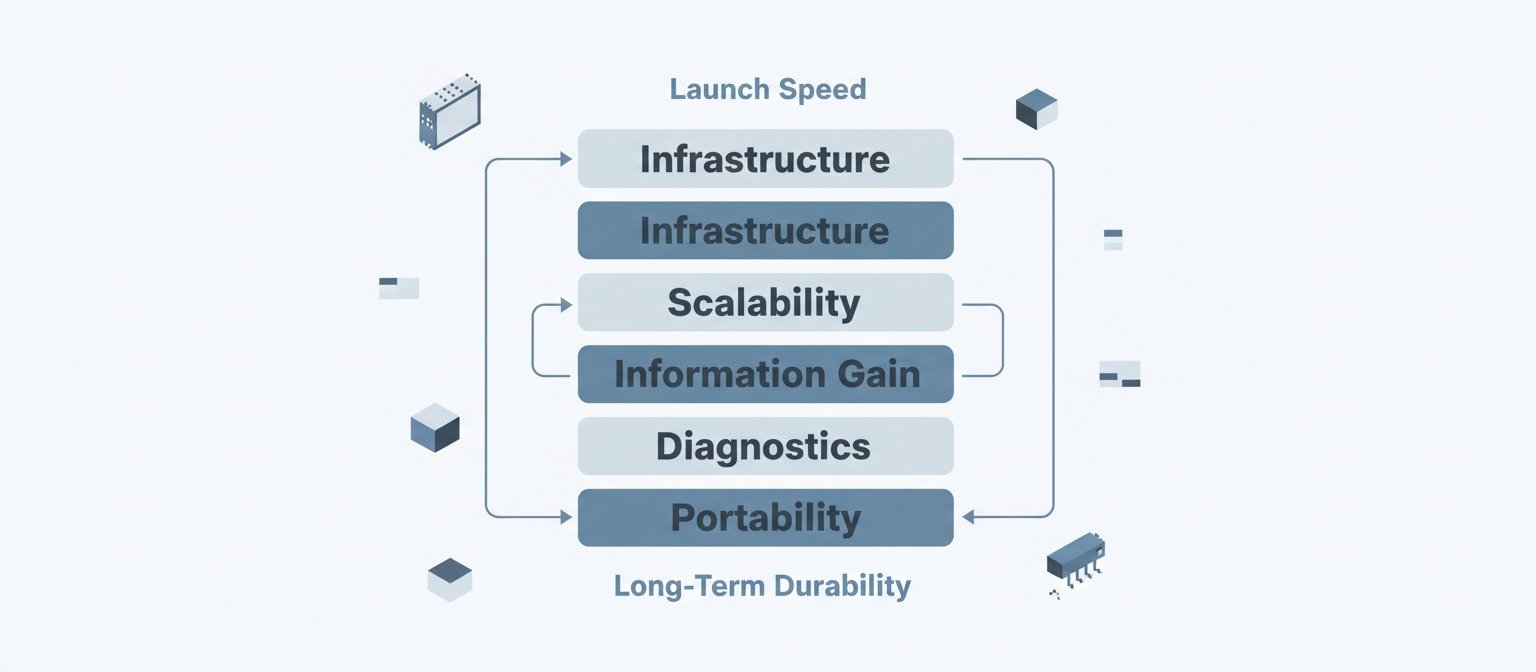
A system-first checklist to evaluate AI website builders: rendering, SEO control, scalability, diagnostics, crawl/indexing behavior, content ownership, lock-in, and migration.

A system-first checklist to evaluate AI website builders: rendering, SEO control, scalability, diagnostics, crawl/indexing behavior, content ownership, lock-in, and migration.
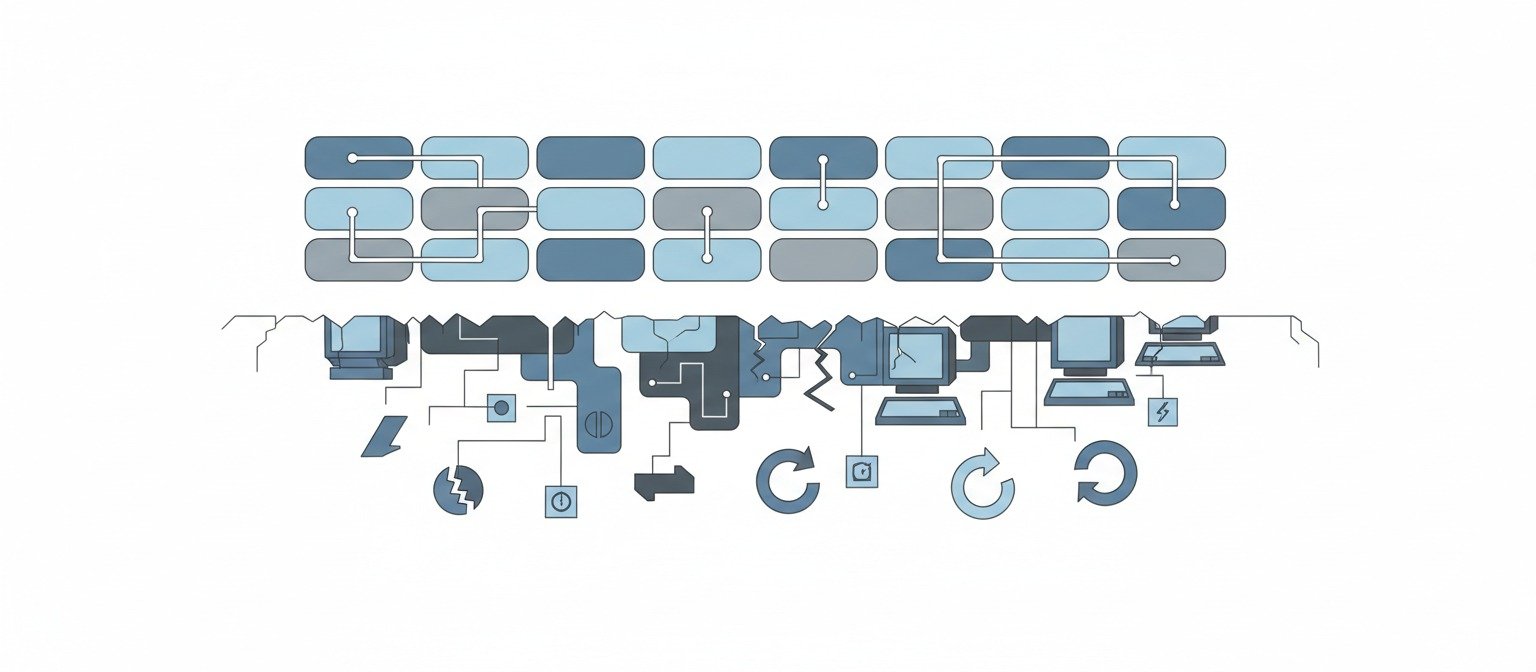
A neutral, system-level explanation of why AI automation often underdelivers after launch, even when tools work: hidden costs, oversight, feedback gaps, and drift.
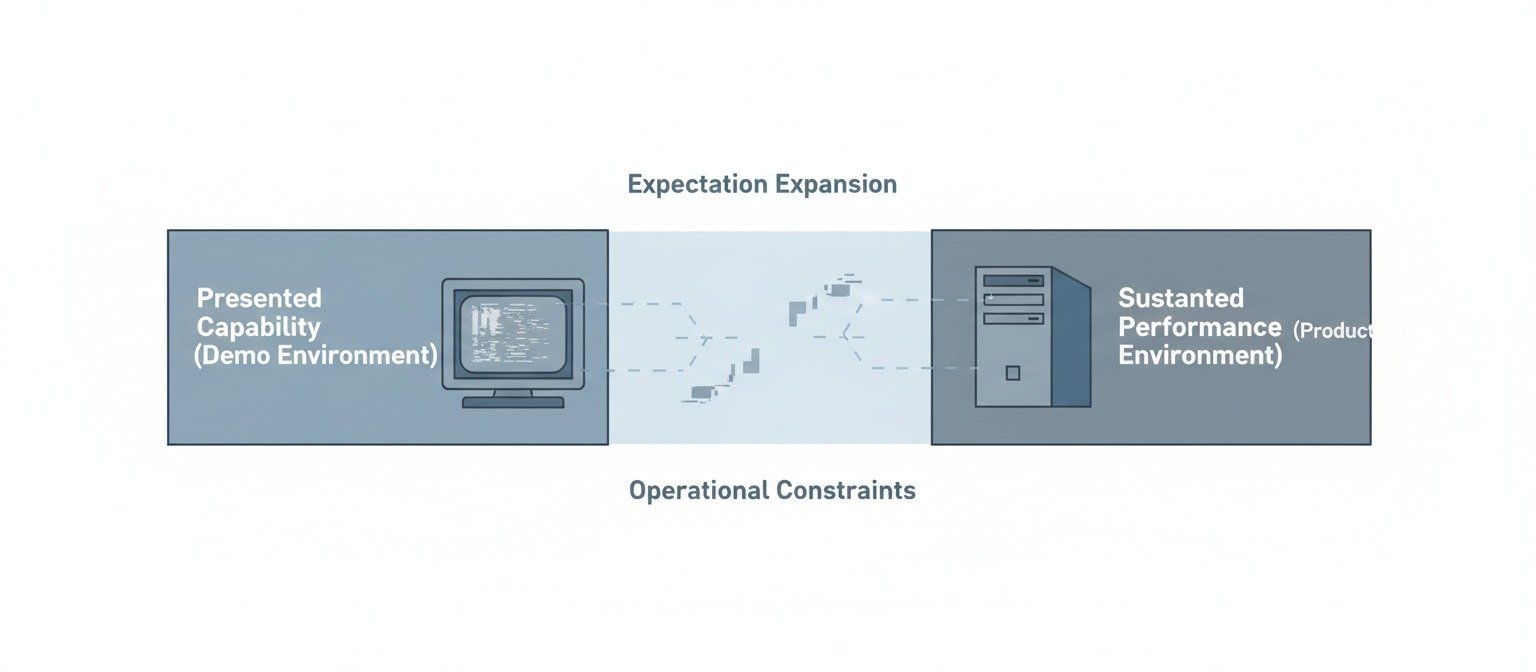
AI platforms can appear to oversell when polished demos outperform real-world deployment. This gap often reflects structural market pressures, where expectations expand faster than operational stability.
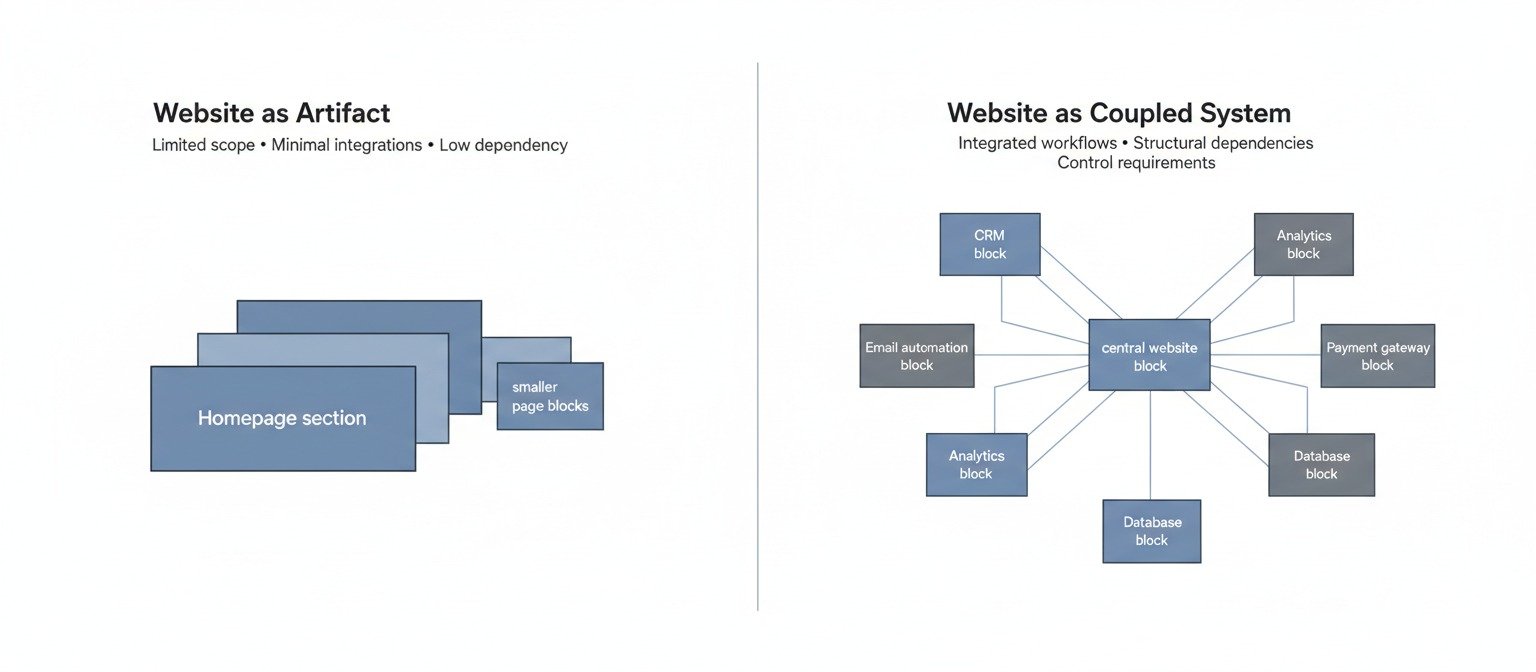
AI website builders make sense under specific structural conditions. They perform well when a website functions as a bounded digital asset—limited in scope, light on integrations, and not deeply dependent on advanced SEO architecture or automation workflows. In these scenarios, speed and simplicity create real value.
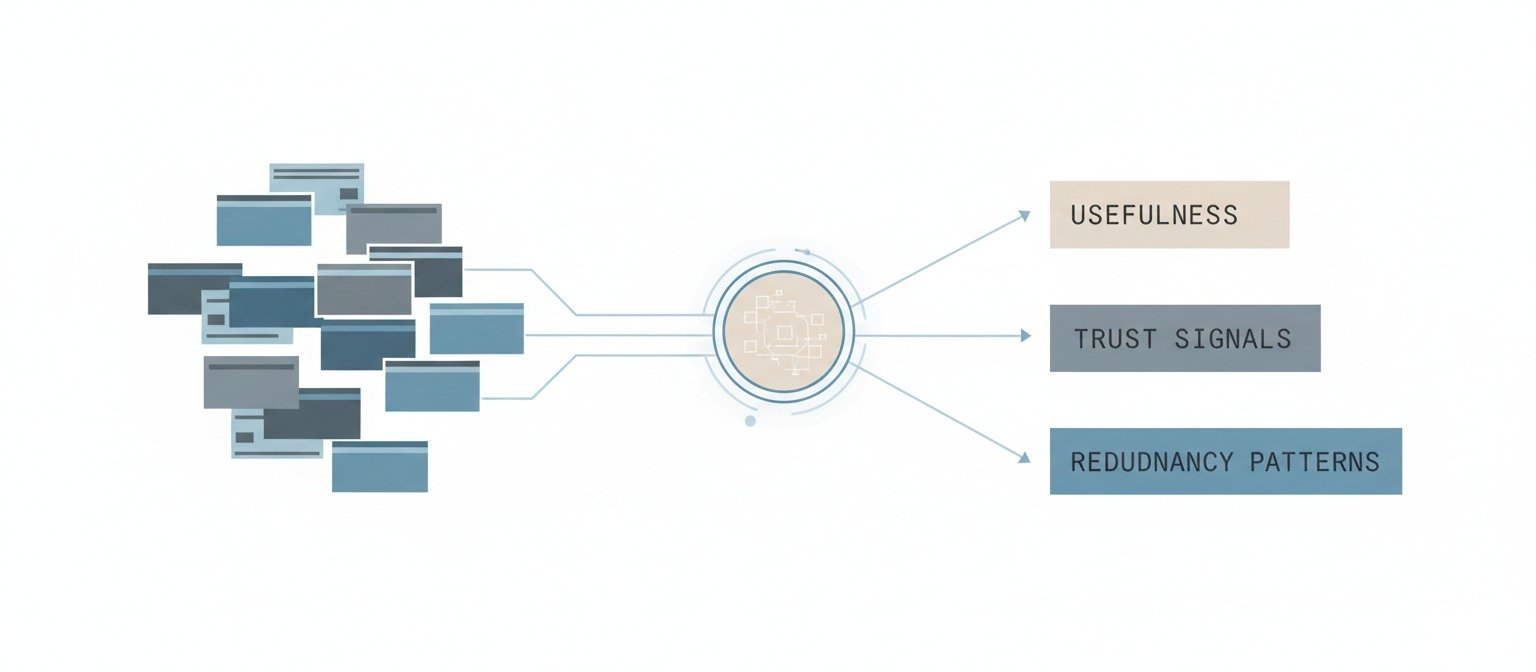
Google doesn’t need an “AI detector” to evaluate content. It evaluates outcomes—usefulness, trust, originality signals, and system footprints created by scaled publishing systems.
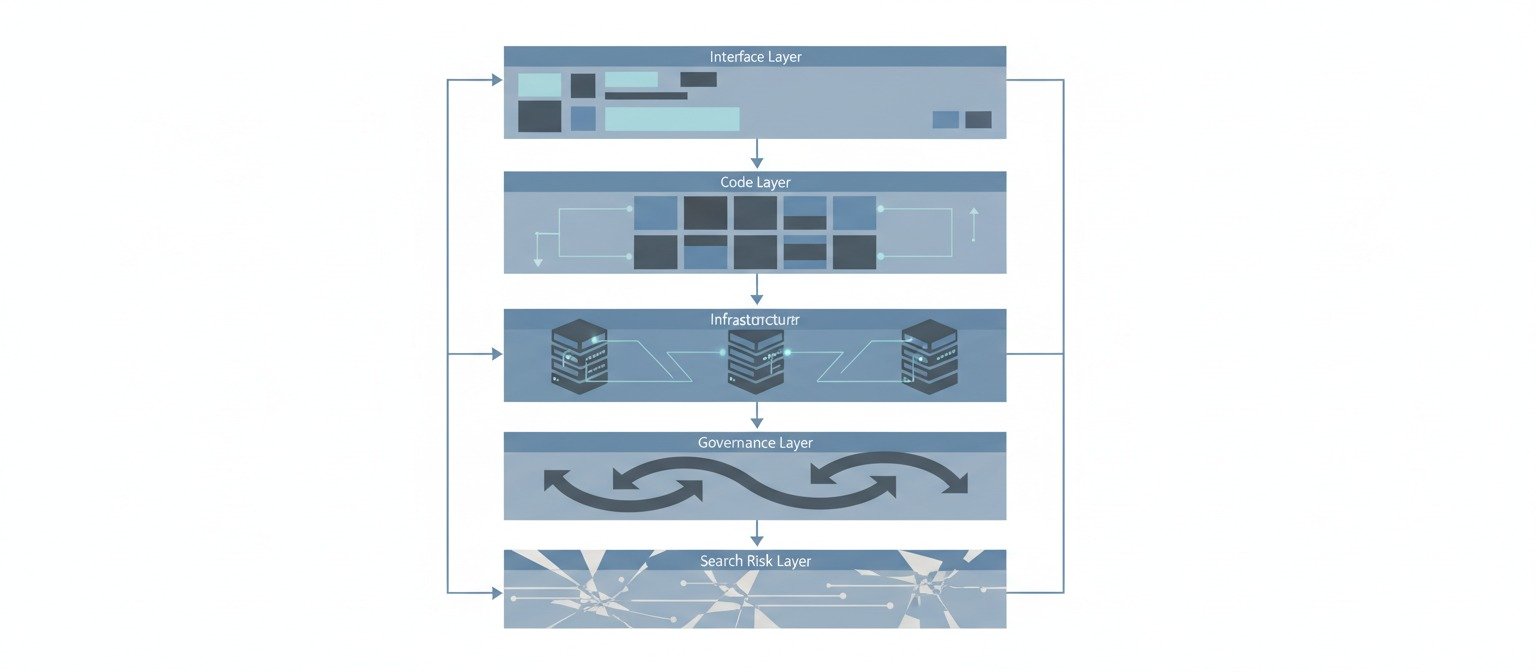
AI website builders are not inherently unsafe. The real risk emerges when backend visibility, portability, and infrastructure control are limited. This article maps AI builder risk across system layers—interface, code, infrastructure, governance, and search visibility—to clarify what actually matters.
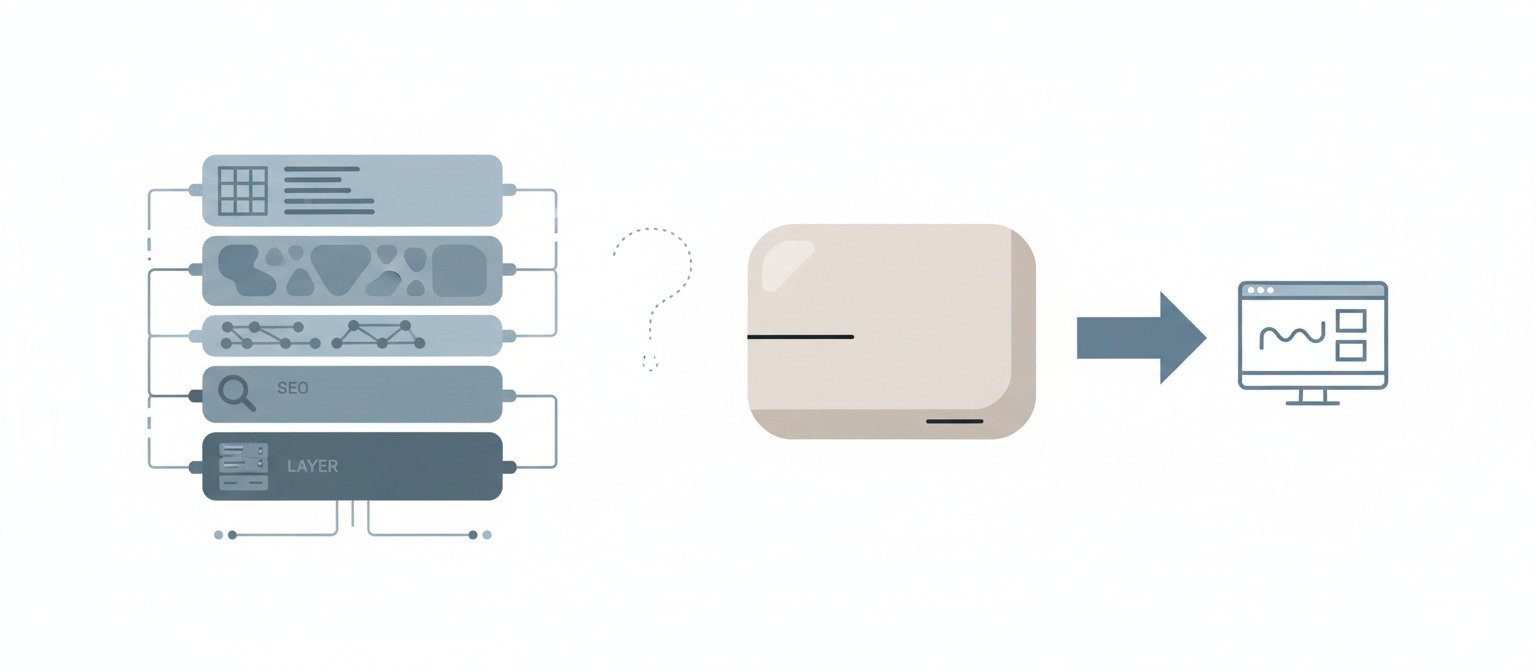
AI website builders can launch a site in minutes. But are they secure, SEO-friendly, and reliable long-term? This article examines control, performance, portability, and structural trust before you decide.
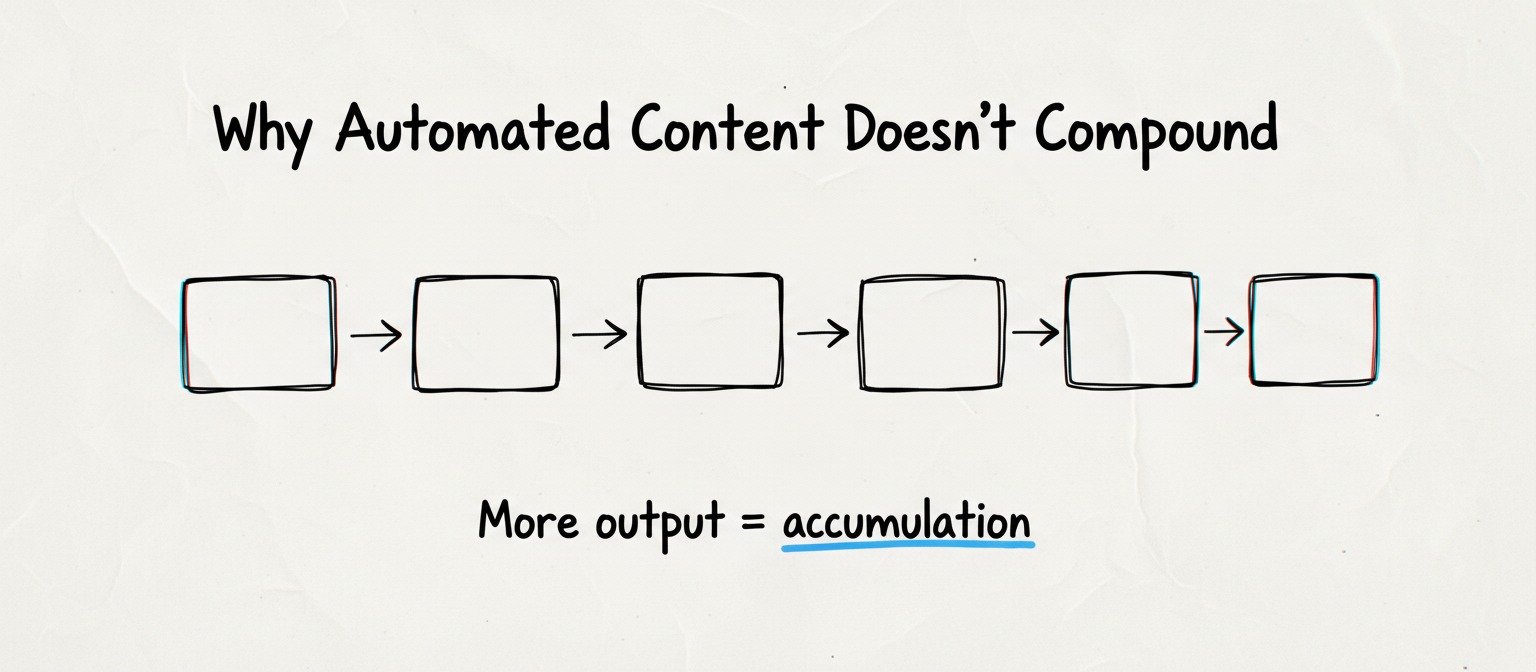
Automated content often increases output but fails to build cumulative authority. This happens because compounding requires reinforcement, memory, and differentiation, while automation usually produces isolated pages that do not strengthen each other over time.
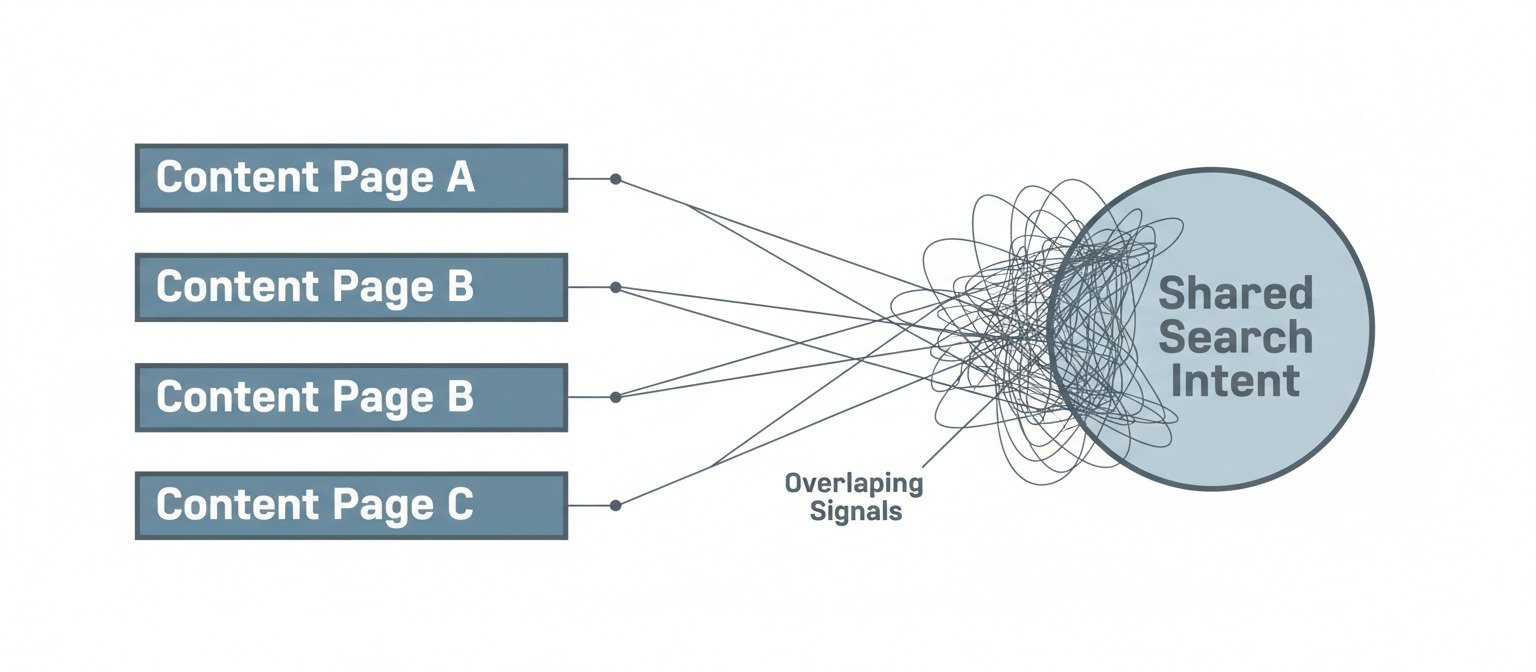
AI content cannibalization issues arise when AI-generated pages unintentionally target the same search intent, causing authority to split instead of compound. This problem starts at the system and structure level, not at the keyword level, which is why many AI-driven sites publish consistently but never achieve stable visibility.
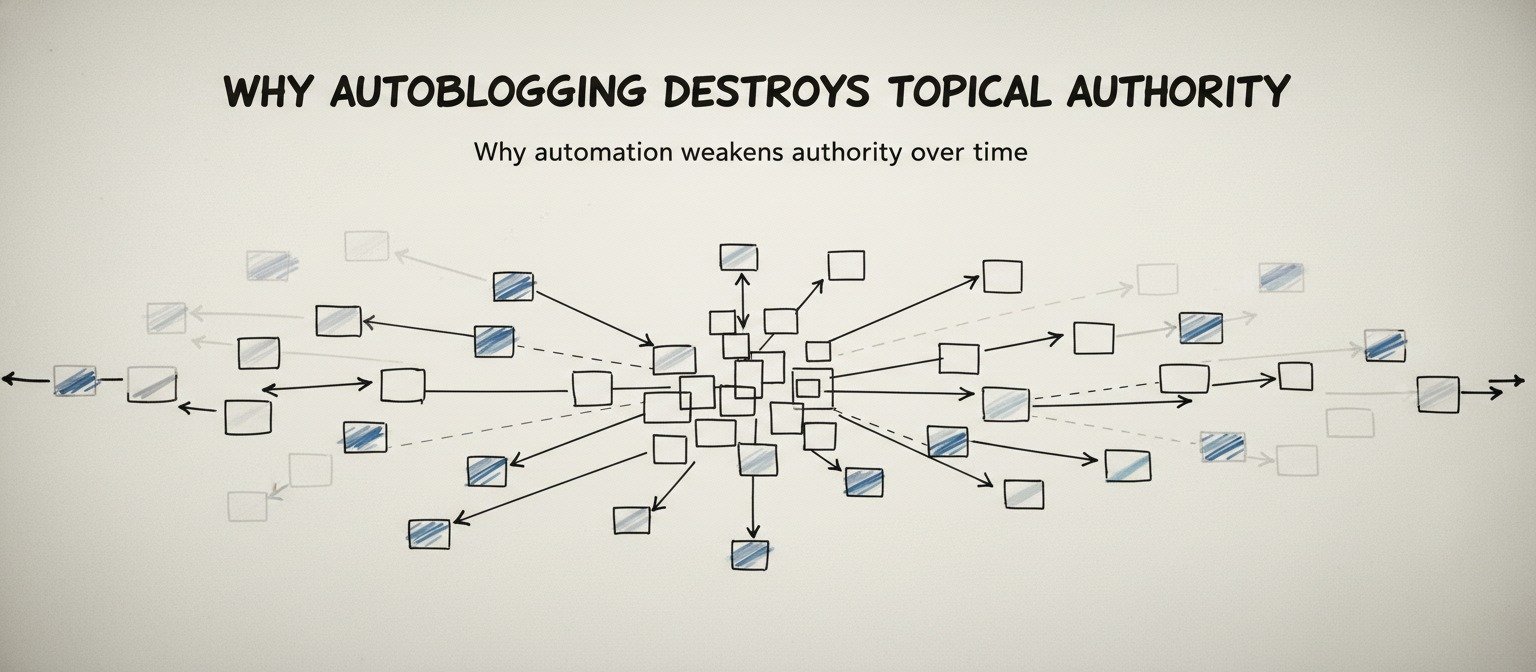
Autoblogging often looks productive at first. Content publishes consistently, pages get indexed, and early impressions may appear. But over time, many autoblogged sites lose topical authority. The problem is not AI or automation itself. It is that automated publishing scales intent overlap, weak reinforcement between pages, and ignores feedback signals that search systems rely on to identify expertise.